LIVE ONLINE · CHILDREN AGED 5–17

A little consistency. A lot of care.

An integrated curriculum of movement, breath, focus and awareness. Choose a gentle introduction or make room for a longer journey of practice.

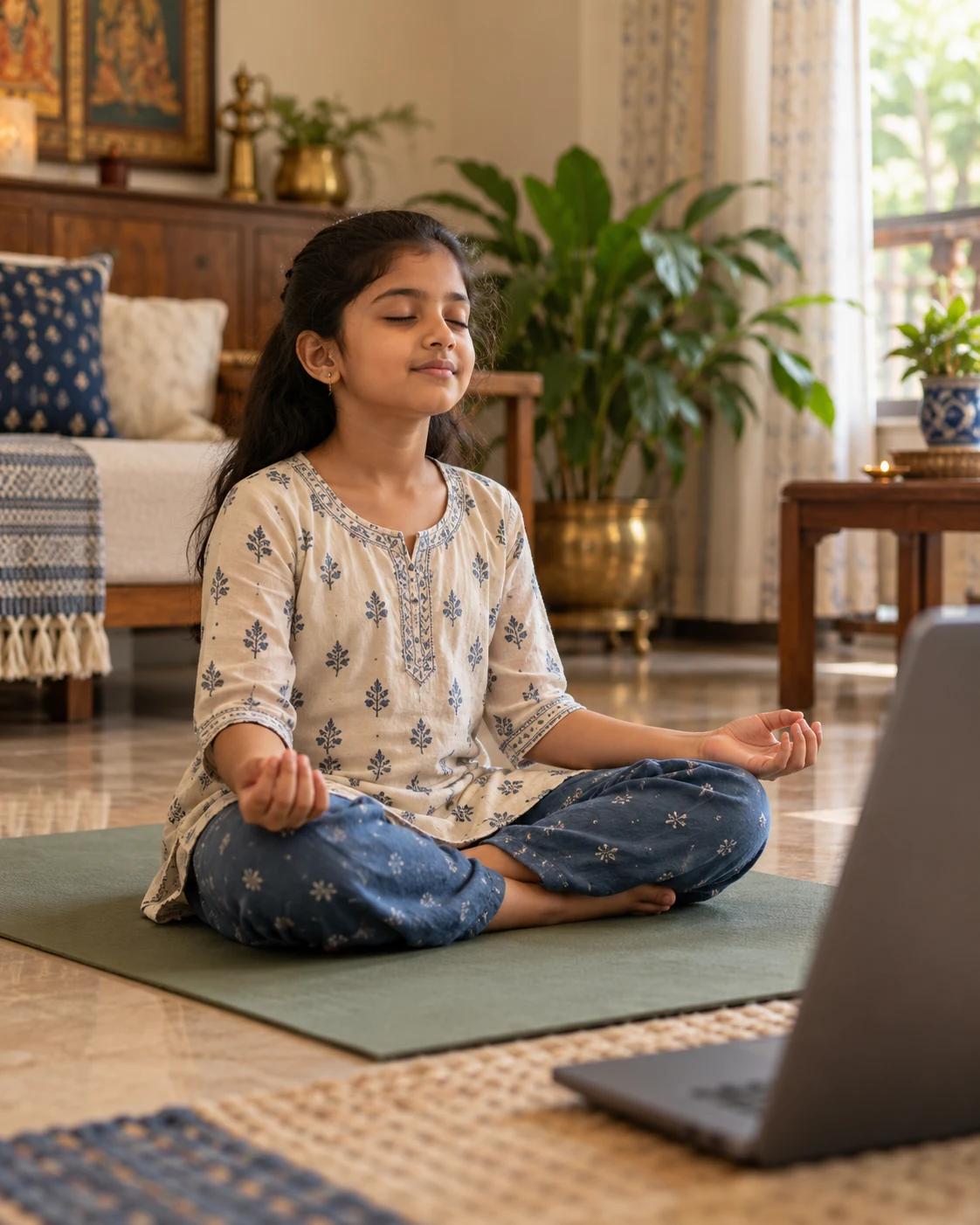
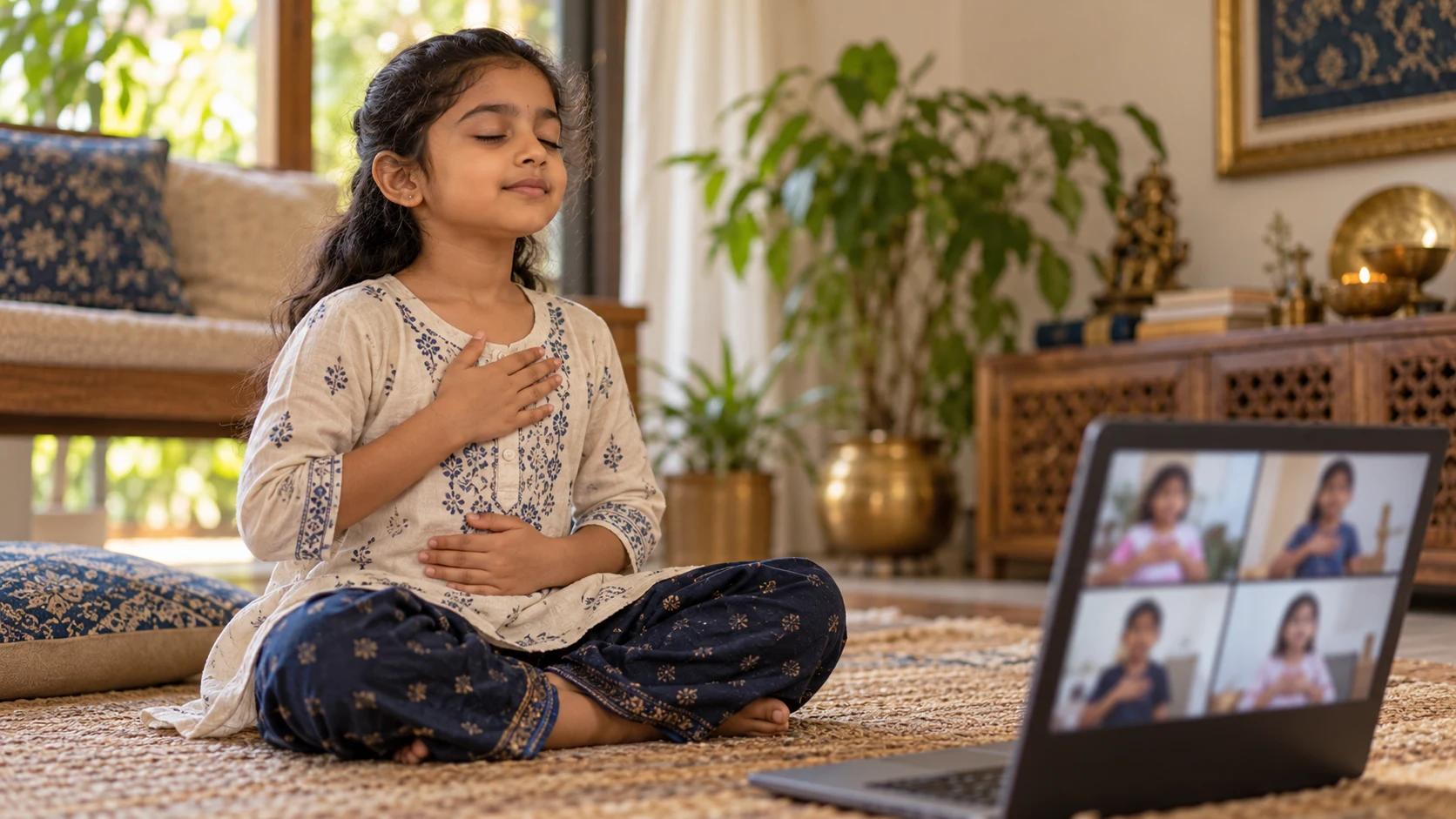
Illustrative child participating in a live online breathing practice

WHAT YOUR FAMILY CAN WORK TOWARDS

Everyday skills.Meaningful possibilities.

From staying with a task to trying again with confidence, these are skills we help children practise. Progress grows at an individual pace, shaped by regular participation and support at home. These are teaching goals, rather than guaranteed results or clinical assessments.

01

Return attention to the task

We practise noticing distraction and gently returning to a movement, breath or activity.

Notice: fewer reminders during a familiar practice.
02

Pause before reacting

Children explore a pause, name how they feel and use a gentle breathing routine.

Notice: willingness to pause and try again.
03

Follow and remember steps

Movement sequences and games give children opportunities to hold instructions in mind.

Notice: following a familiar sequence with less prompting.
04

Try with confidence

A supportive group encourages participation and effort without comparing children.

Notice: greater willingness to join or demonstrate an activity.
05

Build body awareness

Yoga and coordination activities invite children to notice posture, movement and comfortable breathing.

Notice: more awareness during guided movement.
06

Make practice a habit

Live sessions and parent guidance create a regular place for purposeful practice at home.

Notice: returning to the routine more consistently.
Research behind mindful practice

THE RESEARCH CONNECTION

Yogic practice, viewedthrough learning science.

Executive function means skills such as holding information in mind, managing impulses and adjusting to changing rules. Mindful activities give children opportunities to practise attention and awareness.

DEVELOPMENTAL SCIENCE

Skills grow through practice.

Harvard’s Center on the Developing Child describes working memory, self-control and mental flexibility as important skills that develop through interactions and practice. This supports making space for age-appropriate activities and adult guidance; it is not an endorsement of our program.

Read Harvard’s activity guide
MINDFULNESS RESEARCH · 2022

Promising findings. Honest limits.

A review of 66 randomised trials found attention and executive-function benefits compared with no added intervention. Against other active activities, benefits were limited to small improvements in anxiety/stress and mindfulness. Follow-up benefits were not established, and evidence quality was generally low.

Read Dunning et al.’s review

These sources concern child development and mindfulness, not a trial of our 10-week program. They do not establish blindfold vision, third-eye activation, higher IQ or guaranteed academic improvement. Our approach is research-informed educational wellness; individual progress varies.

Look for progress you can describe.

At the start, note one everyday goal: following instructions, returning to a task or joining practice willingly. Revisit it weekly with your child. Celebrate effort and examples rather than comparing scores or expecting a fixed timeline.

A SIGNATURE PART OF OUR PROGRAM

Blindfold training.Sensory exploration.

Blindfold identification and sensory-awareness activities are an important part of our Brain Yoga & Intuition training—not just a small addition to the curriculum.

Our community shares student demonstrations involving reading, writing, colour identification, colouring, chess and Rubik’s Cube activities while blindfolded. Every child brings different strengths and learns at their own pace. We help them explore their skills through guided practice, curiosity and consistent participation; individual outcomes vary.

  • Guided blindfold identification and sensory exploration
  • Attention, coordination and hands-on puzzle activities
  • A structured setting with parent involvement
  • Student demonstrations and parent experiences
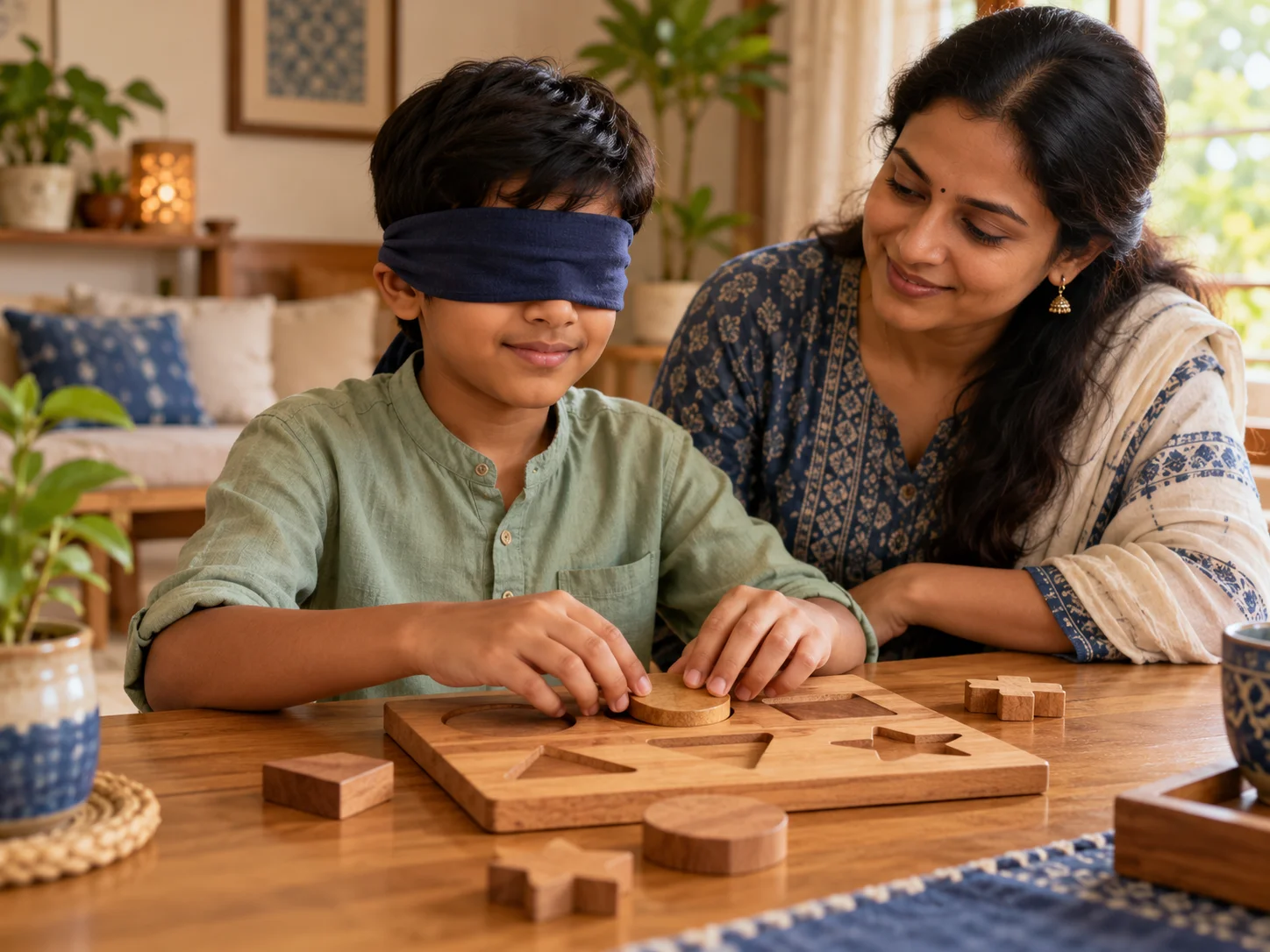
Illustrative sensory-awareness exercise: child explores a puzzle while blindfolded, with a parent supervisingIllustrative activity · Actual student media to follow

THE FLAGSHIP JOURNEY

10-Week Sadhana Program

Two weeks of guided training. Eight weeks of free practice sessions. A guided structure that makes consistent practice feel supported.

  • Live Brain Yoga & Intuition Development Online Classes
  • Yoga, gentle pranayama, coordination and concentration practices
  • Mindfulness, chanting and guided sensory awareness activities
  • Continued practice sessions and parent guidance
  • A supportive community and age-appropriate activities
WEEKS 01–02 · GUIDED TRAINING

Learn with support

Meet the core practices, ask questions and establish a manageable routine.

WEEKS 03–10 · FREE PRACTICE SESSIONS

Return and reinforce

Practice with guidance, build familiarity and encourage consistency at home.

Batch timings and session duration will be explained in the free webinar.

Child practicing breathing with a laptop showing an illustrative live online class

Is this the right fit?

For children aged 5–17 whose families want a structured, educational wellness routine. We discuss your child’s age, preferred timing and needs before you join.

Parent support matters, especially for younger children. Progress is individual; there are no guaranteed results.

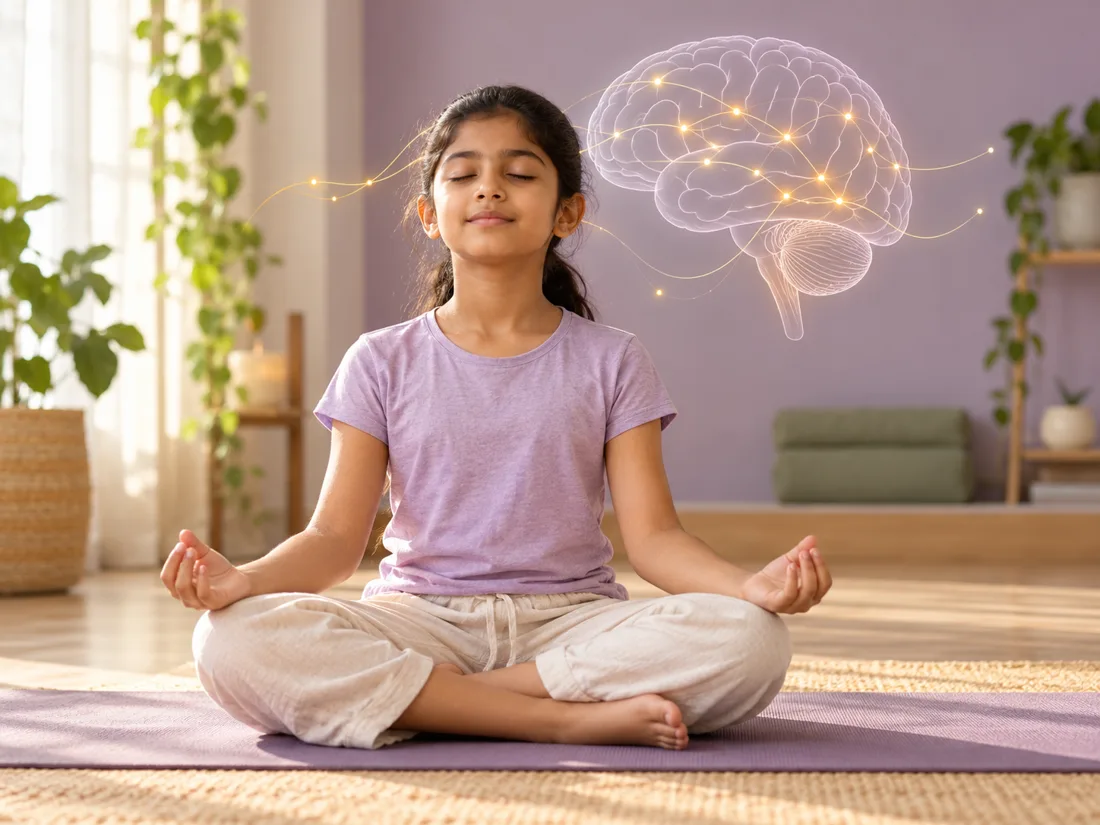
Child practising breath awareness beside an illustrative brain motifConceptual illustration · Mindful practice and learning

MEET THE APPROACH

Focus & Brain Power Mastery Workshop

An introduction for parents and children to experience Brain Yoga, explore practical focus activities and understand how consistent practice fits into family life.

  • Live online, parents and children together
  • Try introductory movement and attention activities
  • Understand the program and ask questions
  • No recording promised; attend the live session

Webinar duration: 2 hours. The joining link is shared in our community.

KEEP RETURNING TO PRACTICE

Weekly Practice & Inner Circle

A shared rhythm for continuing students. Practise regularly, hear guidance from mentors and bring your questions to the Inner Circle.

  • Weekly live practice and community connection
  • Inner Circle sessions for questions and encouragement
  • Sunday Yoga Sessions for shared movement and calm

[Weekly schedule and access — to confirm]

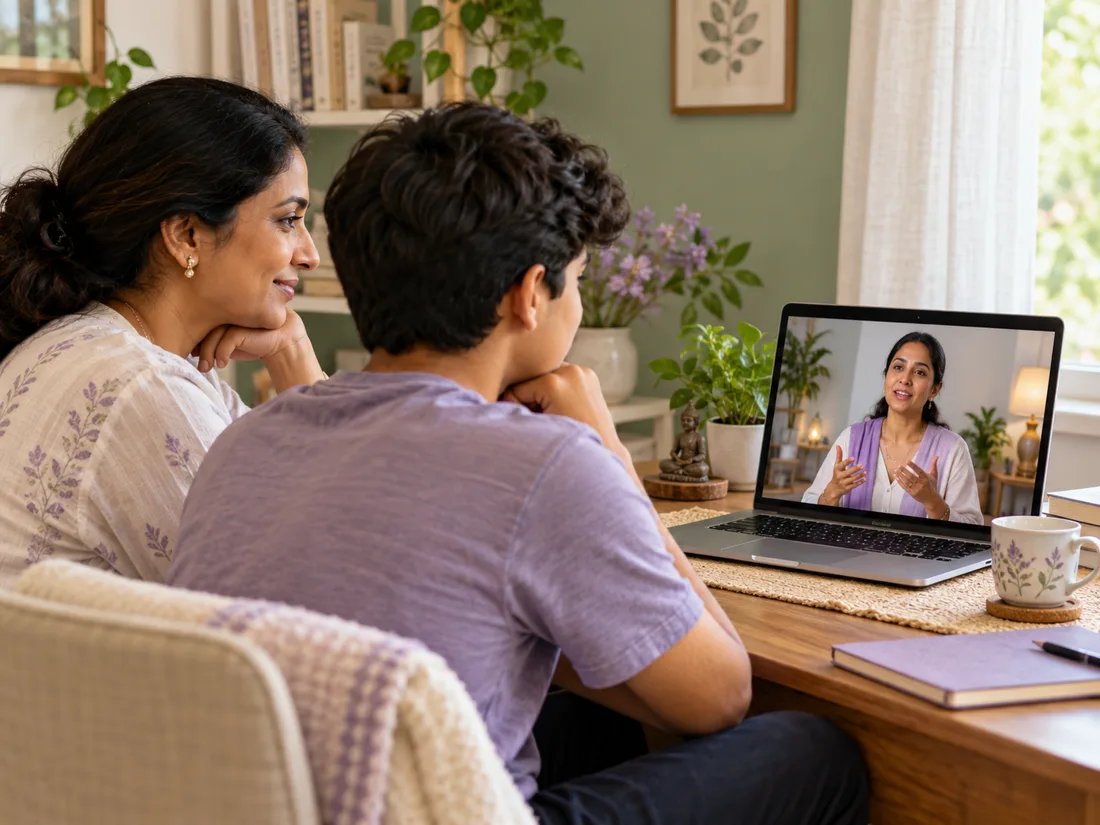
Parent and child listening to an online mentor during an illustrative Inner Circle session
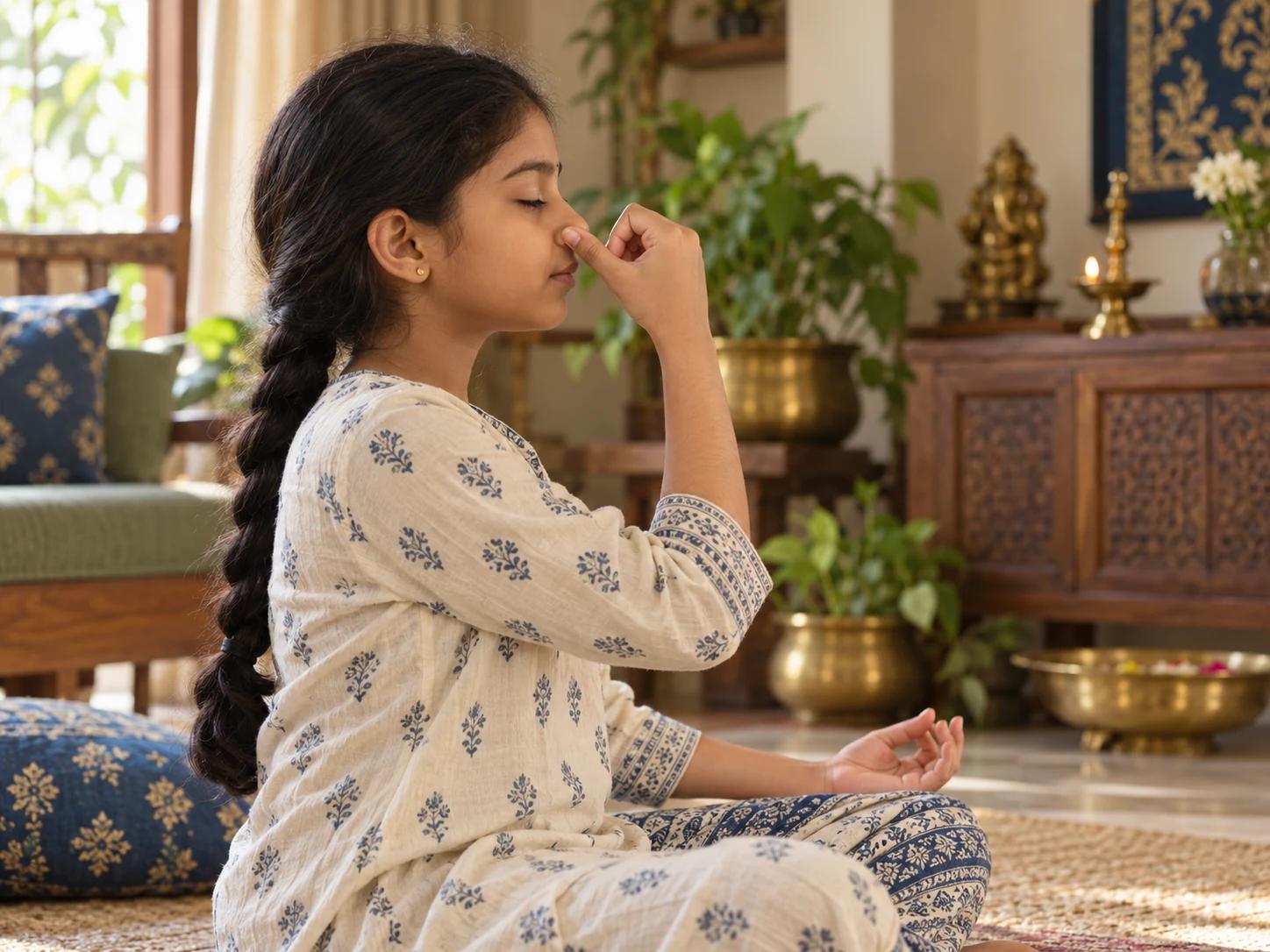
Pre-teen child practicing a gentle alternate nostril breathing gesture

THE BUILDING BLOCKS

Movement, breathand awareness.

Yoga & Pranayama Practice Sessions and Brain Gym & Coordination Exercises are woven through our teaching, together with concentration and memory-building activities.

Children explore cross-lateral movements, hand-eye coordination, simple recall games and gentle breath awareness. Practices are explained, supervised and adapted for age.

Sensory activities, including optional age-appropriate blindfold tasks, are guided exercises in attention and awareness. They do not establish an ability to see without the eyes.

01

Brain Yoga

Movement with attention, one step at a time.

02

Breath & Pranayama

Gentle breathing and body awareness.

03

Coordination

Purposeful movement and playful focus tasks.

04

Mindfulness

Notice thoughts, feelings and the present moment.

05

Chanting & Values

Rhythm, reflection and rooted daily practices.

06

Sensory Awareness

Blindfold identification and guided sensory exploration.

PARENTS ARE PART OF THE JOURNEY

Support at home.Confidence in the approach.

Parent Guidance Sessions make space for your questions and help you encourage practice without pressure.

  • Understand the purpose of the practices
  • Create a quiet, manageable routine at home
  • Encourage effort and consistency rather than comparison
  • Discuss your child’s participation and practical concerns
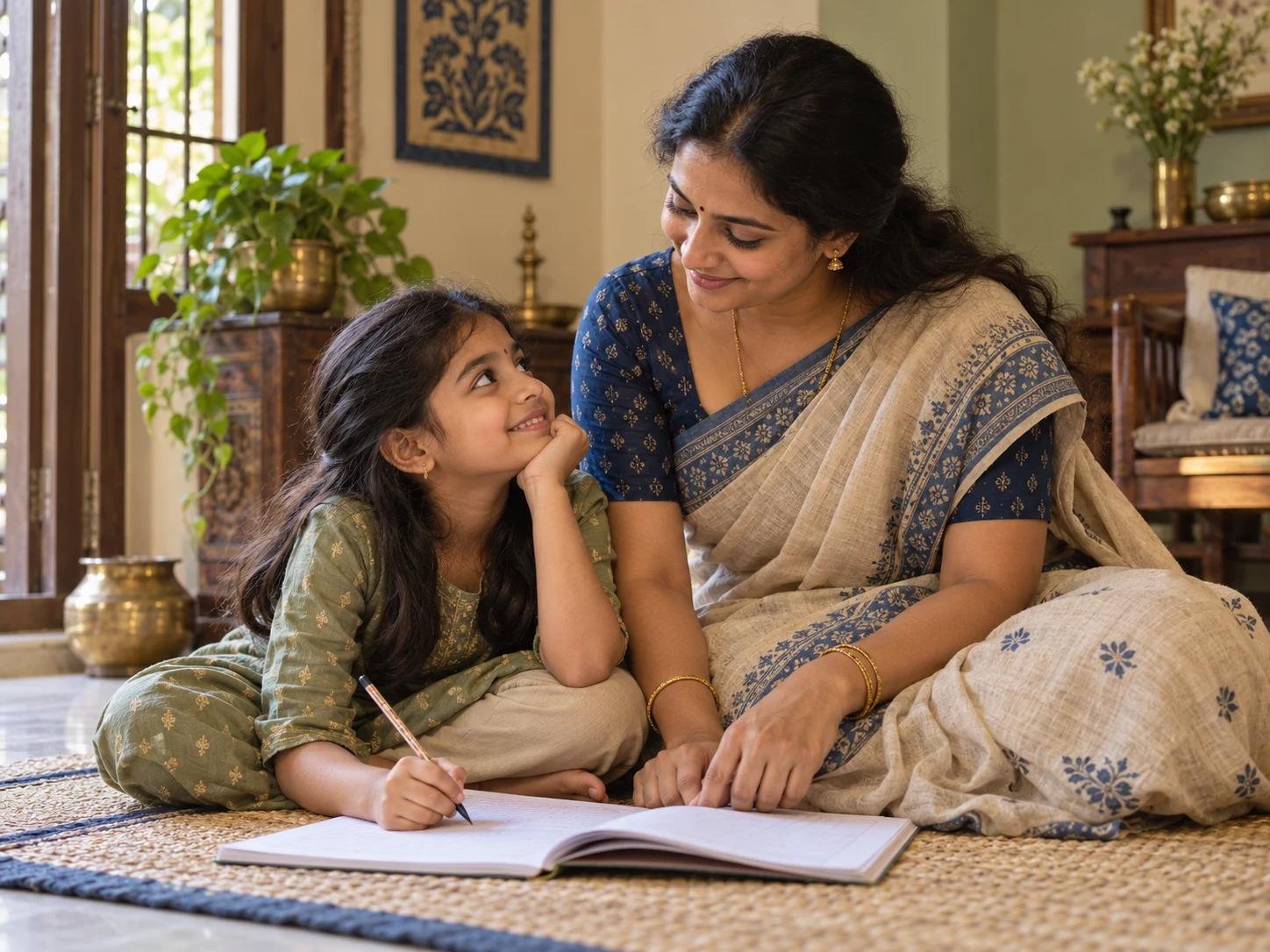
Indian mother and child reviewing a notebook together on a yoga mat

CHOOSE YOUR STARTING POINT

Three ways to begin.

Comparison of webinar, Sadhana and continuing practice
At a glanceWebinar10-Week SadhanaWeekly Practice
Duration2 hours10 weeksOngoing; access to confirm
FormatLive online introductionGuided training + continued practiceLive online community sessions
Best forParents exploring the approachFamilies building a steady routineContinuing students
Parent supportIntroduction and questionsParent guidance includedInner Circle; access to confirm
Next stepRegisterEnquireAsk for details

LET’S FIND THE RIGHT GROUP

Make your firstenrolment enquiry.

Tell us about your child and preferred timing. We’ll help you find the right group and understand the training schedule.

Share a daily-life example or your hopes for the course. Please avoid private medical details.

Your answers are saved in the community’s Google Sheet. WhatsApp group membership is your next step and requires tapping Join.

A SMALL FIRST STEP

Begin with a little curiosity.
Build a steady practice.

Join a live webinar with your child. Meet the community, try the approach and ask your questions.

Saturday, November 14, 2026 · 8:00 PM IST

Talk to us about your child
Join our WhatsApp group
Call WhatsApp group